
Thanks to all who were able to join CAPCSD for its 2026 Virtual Conference!
From the 2026 Annual Conference in Denver, CO, CAPCSD is presenting the 2026 Virtual Conference on April 9-10, 2026.
This virtual conference will feature 10 hours of online sessions by invited speakers and selected presenters on the conference theme, Elevating Excellence.
- Earn up to 1.0 ASHA and AAA CEUs
- Available live only
- Not available on-demand
- As these sessions are also breakout sessions during the annual conference, there will not be an Add-On option for those attending the annual conference.
Description
Bringing together educators and leaders in Communication Sciences and Disorders (CSD), this virtual conference centers on Elevating Excellence in teaching, clinical education, and professional preparation. Sessions will spotlight innovative, evidence-informed practices that support success across undergraduate and graduate programs, from fostering professional practice behaviors and trauma-informed, interprofessional collaboration to designing equitable clinical faculty workloads.
Attendees will explore strategies to embed critical thinking instruction across coursework, create high-quality learning experiences for diverse and multigenerational students, and advance access and inclusion by threading disability support throughout CSD curricula. The program also highlights forward-looking approaches to excellence in CSD education, including ethical decision-making around artificial intelligence, asynchronous online graduate instruction, problem-based learning across disciplines, and the use of simulation and the scholarship of teaching and learning (SoTL) to innovate, educate, and publish.
With sessions that also address essential life and professional skills—such as financial literacy and navigating productive discomfort for interprofessional growth—this conference offers practical tools and fresh perspectives for today’s educators. Join us to elevate excellence in CSD education and prepare students for the evolving demands of professional practice.
Agenda
Thursday, April 9, 2026
Webinar will start at 10:15 AM MT (9:15 AM PT/11:15 AM CT/12:15 PM ET)
Welcome by CAPCSD President Tricia Montgomery
10:15 AM - 11:15 AM MT - Helping Students Master Professional Practice Behaviors: Elevating Student Success through Clinical Education (0.10 ASHA & AAA CEUs)
11:15 - 11:30 AM MT - BREAK
11:30 - 12:30 PM MT - Threading the Access Needle: Supporting Disability Inclusion in Communication Sciences and Disorders Programs (0.10 ASHA & AAA CEUs)
12:30 - 12:45 PM MT - BREAK
12:45 - 1:45 PM MT - Beyond the Basics: Elevating Excellence in Asynchronous Online Graduate Education (0.10 ASHA & AAA CEUs)
1:45 - 2:15 PM MT – LUNCH BREAK
2:15 - 3:15 PM MT - Innovate, Educate, Publish: A Guide to SoTL and Simulation (0.10 ASHA & AAA CEUs)
3:15 - 3:30 PM MT - BREAK
3:30 - 4:30 PM MT - Problem-Based Learning Across Disciplines: Discomfort as a Catalyst for Interprofessional Growth (0.10 ASHA & AAA CEUs)
Friday, April 10, 2026
Webinar will start at 10:15 AM MT (9:15 AM PT/11:15 AM CT/12:15 PM ET)
10:15 AM - 11:15 AM MT - Preparing CSD Students for Trauma-Informed, Interprofessional Collaboration (0.10 ASHA & AAA CEUs)
11:15 - 11:30 AM MT - BREAK
11:30 - 12:30 PM MT - Creating Equitable Clinical Faculty Workloads (0.10 ASHA & AAA CEUs)
12:30 - 12:45 PM MT - BREAK
12:45 - 1:45 PM MT - CATALYST: Embedding Critical Thinking Instruction Across Undergraduate and Graduate CSD Coursework (0.10 ASHA & AAA CEUs)
1:45 - 2:15 PM MT – LUNCH BREAK
2:15 - 3:15 PM MT - Financial Literacy for Students (0.10 ASHA & AAA CEUs)
3:15 - 3:30 PM MT - BREAK
3:30 - 4:30 PM MT - To AI or Not to AI, That is the Question. AI Ethics in CSD (0.10 ASHA & AAA CEUs)
CAPCSD Member
CAPCSD Affiliate
CAPCSD Nonmember
Cancellation & Refund Policy
Session Overview
Helping Students Master Professional Practice Behaviors: Elevating Student Success through Clinical Education
This interactive presentation will explore the evolving definition of professionalism in educational and healthcare settings, current challenges related to bias, and our program’s attempt to facilitate the types of professional practice behaviors that can allow students to be successful in the environments where they will deliver services. Changes to clinical education developed in response to shifting student needs and student/supervisor feedback in this area will be discussed. Interprofessional Education opportunities will be explored by examining ways in which multiple departments in the university college/school can apply similar educational principles to ensure student success. Audience participation will be encouraged to further problem solve solutions to meeting the learning needs of the next generation of SLPs.
Learning Objectives:
- Describe the challenges associated with addressing professional practice behaviors and career readiness in clinical settings across disciplines in university departments.
- Summarize one program’s approach to evaluating and defining “professional practice behaviors” and teaching career readiness from graduate student orientation to degree completion.
- Reflect on additional concerns with student professional practice behaviors and career readiness across programs and share ideas to improve overall student outcomes.
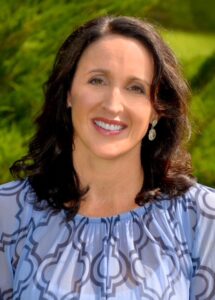 Author and Presenter: Kelly T. Harrington, MA, CCC-SLP, BCS-SCF
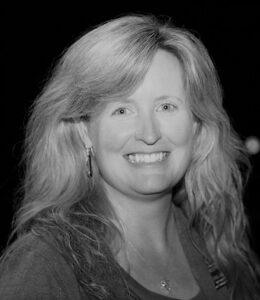 Author and Presenter: Lisa McDonald, MA, CCC-SLP
Threading the Access Needle: Supporting Disability Inclusion in Communication Sciences and Disorders Programs
Communication Sciences and Disorders programs have made tremendous strides in supporting differently abled students, especially in their didactic experiences. However, guidance, and practical implementation of reasonable accommodations can be difficult for the varied clinical experiences. In this interactive session, participants will discuss current practices in supporting students in clinical experiences. We will then consider best practices, shared responsibility frameworks and areas of change through micro lectures, and collaborative brainstorming activities. Finally, we will apply this knowledge to various case studies and evaluate benefits and potential pitfalls. Overall, this session will provide the participants with clear guidance to support students in both didactic and clinical experiences.
Learning Objectives:
- Contrast deficit-based views of learning with inclusive and asset-based mindsets and its impact on success of differently abled students in CSD.
- Identify common barriers to success for college students with different abilities and discuss reasonable accommodations in clinical experiences.
- Summarize inclusive strategies and shared responsibility frameworks that support the success of students in didactic and clinical courses.
 Author and Presenter: Madhu Sundarrajan, PhD, CCC-SLP
 Beyond the Basics: Elevating Excellence in Asynchronous Online Graduate Education
Drawing on the principles from Community of Inquiry models, Universal Design for Learning (UDL) and adult learning theory, participants will learn strategies for creating learning objectives, assessments, and activities to create transformative asynchronous courses. This session will also address how these concepts apply not only to asynchronous course development but programmatic construction and delivery. The session will provide practical examples for cognitive, social, and teaching presence that supports academic rigor and ensures students have access to the knowledge needed for student achievement. Attendees will have the opportunity to apply these principles to their own courses during the presentation.
Learning Objectives:
- Evaluate programmatic decisions and construction to support the success of the asynchronous learning methodology.
- Apply principles of Community of Inquiry, Universal Design for Learning, and Adult Learning Theories to develop a learning activity for an asynchronous course.
- Discover tools to leverage technology for student engagement in the asynchronous environment.
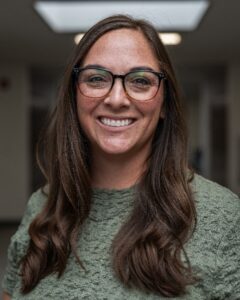 Author & Presenter: Klaire Brumbaugh, EdD, ClinScD, CCC-SLP
 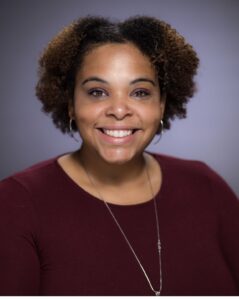 Author & Presenter: Lauren Wright Jones, PhD, CCC-SLP
Innovate, Educate, Publish: A Guide to SoTL and Simulation
Clinical simulation provides the ideal platform for the scholarship of teaching and learning (SoTL). This session is designed to help you marry your clinical simulations with more robust pedagogy and research design for better outcomes. We will address key areas in simulation design to increase rigor, enhance assessment, and leverage data triangulation to turn your innovative teaching into publishable science. Through interactive case studies and collaborative discussion, you will learn to refine your research questions and design effective studies, navigating the ethical considerations unique to clinical simulation. This presentation will focus on tools to not only enhance student learning but also to contribute meaningfully to the broader body of educational research.
Learning Objectives:
- Outline a research study that uses simulation-based pedagogy.
- Identify at least three strategies to enhance the rigor and validity of their simulation-based research.
- Identify and explain the unique research design considerations required for SoTL studies utilizing clinical simulation.
 Author and Presenter: Amanda L. Stead, CCC-SLP, PhD
 Problem-Based Learning Across Disciplines: Discomfort as a Catalyst for Interprofessional Growth
This session presents a 10-plus-year interprofessional education (IPE) initiative that integrates problem-based learning (PBL) across speech-language pathology, occupational therapy, physical therapy, social work, and education. Using authentic IEP cases, faculty intentionally design discomfort into team-based scenarios to deepen students’ understanding of professional roles, communication, and collaboration. Pre/post survey data, including measures of self-efficacy and interprofessional competence (Axboe et al., 2016), demonstrate gains in confidence and readiness for collaborative practice. Findings align with recent literature showing that IPE–PBL strengthens collaborative competence and role clarity (Keck et al., 2025; Hsiao et al., 2020; MacQuillan, 2019). Attendees will gain insight into replicable strategies for using authentic, case-based PBL to introduce purposeful discomfort, enhance role clarity, and strengthen interprofessional teamwork skills in graduate students preparing for collaborative, team-based practice.
Learning Objectives:
- Analyze how intentional discomfort in PBL fosters interprofessional growth and role clarity.
- Evaluate student outcomes from IPE–PBL using self-efficacy and collaboration measures.
- Design strategies to implement replicable, case-based interprofessional experiences within health professions curricula.
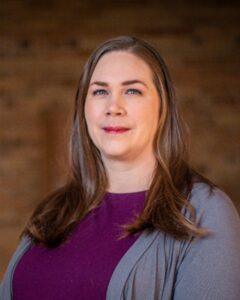 Author and Presenter: Mikaely T. Schmitz, CCC-SLP
 Preparing CSD Students for Trauma-Informed, Interprofessional Collaboration
This session highlights an innovative interprofessional education (IPE) training that engaged speech-language pathology, criminology, and child advocacy students alongside practicing professionals. Developed in response to student-identified concerns about mandated reporting, systemic inequities, and professional boundaries, the event included a moderated expert panel, interdisciplinary case simulation, and large-group reflection. The design intentionally incorporated non-traditional IPE partners and emphasized cultural humility, systemic awareness, and trauma-informed practice. Students analyzed ethical decision points, practiced applying strategies in a safe environment, and received immediate feedback from professionals. This replicable model demonstrates how tailoring IPE experiences to student needs, expanding partnerships beyond common OT/PT/ABA collaborations, and embedding application-based activities can better prepare students for collaborative practice in diverse and complex real-world settings.
Learning Objectives:
- Identify strategies for creating interprofessional education opportunities with non-traditional partners to expand beyond typical OT, PT, and ABA collaborations.
- Design interprofessional learning experiences that intentionally address student-identified needs related to trauma, professional boundaries, and systemic inequities.
- Demonstrate approaches for embedding cultural humility and application-based activities, such as case studies, into IPE training.
 Author and Presenter: Emily Weston, CCC-SLP
 Creating Equitable Clinical Faculty Workloads
Presenters will review lessons from an ongoing project beginning September 2024, aimed at developing a data collection method and formula for calculating workloads within a university clinic. This presentation will highlight the specific contextual factors within the university clinic that impacted this project and the workload considerations that broadly impact clinical faculty. The method for examining workload included a questionnaire that was developed collaboratively with clinical faculty members and used to calculate task duration across clinical, research, administrative, and service-related functions. The presentation will review elements of the questionnaire to highlight some common areas of clinical education workload when considering equitable task distribution. Participants will review the task list to identify changes needed given their clinical context and address implications in their programs.
Learning Objectives:
- Describe the benefits of equitable workloads amongst clinical faculty.
- Identify methods used by presenters to collect data on the workloads of clinical faculty.
- Examine and revise a tool for creating equitable workloads for clinical faculty.
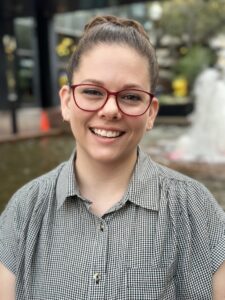 Author and Presenter: Caitlin Al-Mutawa, MS, CCC-SLP
 Author and Presenter: Charlotte King, SLPD, CCC-SLP, BC-ANCDS
CATALYST: Embedding Critical Thinking Instruction Across Undergraduate and Graduate CSD Coursework
Critical thinking is central to clinical competence, yet students in CSD often progress without explicit support for reasoning skills. The CATALYST program was developed as a brief, embedded approach to strengthen reasoning, argument evaluation, and related skills within existing CSD courses without requiring curricular overhaul. Implemented in both undergraduate and graduate contexts, the program consistently improved critical thinking performance, but student perceptions diverged: graduate students connected the activities to clinical reasoning, while undergraduates often questioned their relevance. This session will share the program model, practical strategies for integration, and lessons learned across learner levels. Emphasis will be placed on how faculty can adapt critical thinking instruction to their own courses and address challenges in fostering student engagement and buy-in.
Learning Objectives:
- Describe the structure and instructional design of the CATALYST program for embedding critical thinking into CSD coursework.
- Compare undergraduate and graduate student responses to the intervention, noting both measured gains and differences in perceptions of relevance.
- Develop strategies to adapt and integrate critical thinking instruction into participants’ own courses while addressing challenges with student engagement and buy-in.
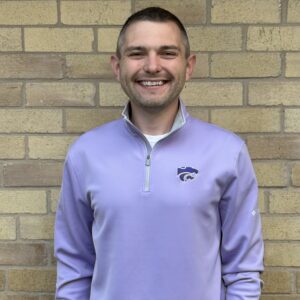 Author and Presenter: David Rehfeld, PhD, BCBA, CCC-SLP
 Financial Literacy for Students
A presentation and discussion on the ways that faculty can communicate with and educate students on how to maximize financial opportunities while minimizing financial debt during post-undergraduate degree training.
Learning Objectives:
- State the current debt-to-income ratio for emerging graduates in Speech-Language Pathology and Audiology.
- Demonstrate to students ways to reduce debt-to-income ratio in pursuit of these degrees.
- Design on-campus support system(s) to rearrange their financial plan for the degree process.
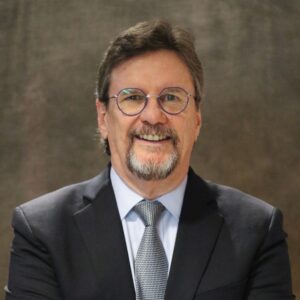 Author and Presenter: Victor Bray, MSC, PhD, FNAP
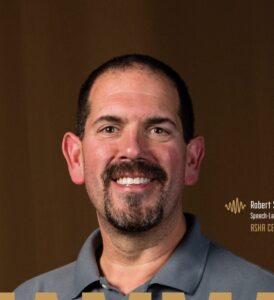 Author and Presenter: Robert W. Serianni, MS, CCC-SLP, FNAP
 To AI or Not to AI, That is the Question. AI Ethics in CSD
In a world where AI is becoming more prevalent and readily available in clinical and academic settings, establishing ethical AI practices in CSD is imperative. To ensure that students employ ethical uses of AI in clinical and academic settings, AI ethics must be integrated into CSD curriculum and instructors must help students understand the ethical dimensions of their work and empower and motivate them to do ethical work. This presentation will explore AI ethics in CSD higher education through case studies and provide current resources related to AI in higher education. Current ethical dilemmas related to the use of AI in academic and clinical settings will be connected to the ASHA Code of Ethics.
Learning Objectives:
- Describe current ethical issues related to AI use in CSD academic and clinical settings.
- Apply the ASHA Code of Ethics to case studies involving AI use in higher education and clinical practice.
- Identify strategies and resources for integrating AI ethics into CSD curricula to motivate students to use AI responsibly and ethically in academic and clinical settings.
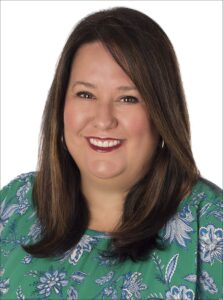 Author and Presenter: AnnMarie C. Knight, PhD, CCC-SLP
ASHA CEUs
AAA CEUs
CAPCSD is approved by the American Academy of Audiology to offer Academy CEUs for this activity. The program is worth a maximum of 1.0 CEUs. Academy approval of this continuing education activity is based on course content only and does not imply endorsement of course content, specific products, or clinical procedure, or adherence of the event to the Academy’s Code of Ethics. Any views that are presented are those of the presenter/CE Provider and not necessarily of the American Academy of Audiology.