
2021 Scholarship Recipients
Congratulations to the students who were selected to receive a 2021 scholarship!
Plural Publishing Research Scholarships
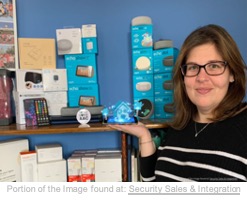
Ohio University
Project:
Implementing Smart Home Technology with individuals who use Augmentative and Alternative Communication (AAC), investigating the impact on independence and connecting individuals with severe physical and communication disorders to other people.

Loyola University
Project: Examine the relevance of anti-racism to speech-language pathology (SLP), evaluate anti-racism training learning outcomes in an SLP graduate program context, and identify best practices of anti-racism training in SLP.
Frances J. Laven Student Service Award

Ph.D. Scholarships
New York University
Topic: Examining speech perception, speech production and word learning in adults with a range of reading ability.
University of Pittsburgh
Topic: Dysphagia management in patients with neurodegenerative diseases via early identification and intervention of swallowing impairments.
University of Oregon
Topic: To explore Speech-Language Pathology graduate students’ perceptions of their skills and training in culturally and linguistically responsive care.
University of Wisconsin - Madison
Topic: Developing a small animal model of laryngeal papillomavirus infection to investigate the role of vocal fold epithelial barrier in infection and disease progression.
University of Minnesota - Twin Cities
Topic: Determine what individual factors influence an adult hearing aid user's tolerance for background noise.

MGH IHP
Topic: The project aims to investigate the validity of articulatory impairment phenotypes in speech motor disorders using a novel acoustic-based framework of motor control (i.e., Coordination, Consistency, Speed, Precision, and Rate).
University of Texas - Austin
Topic: Examine the acceptability and feasibility of a combined speech/language and counseling intervention in primary progressive aphasia.
University of Alberta
Topic: Speech-Language Pathologists (SLPs) provide various models of therapy for people with aphasia (PWA). The purpose of my research will be to gain a qualitative understanding of how different models of therapy impact quality of life from the perspective of PWA.